
Let’s take a closer look at the concept of the “unmanned drive-by-wire chassis for wide-body dump trucks in mining,” which is a core piece of equipment for mines to move towards intelligent and unmanned operations. We’ll explain it from three aspects:

I . What is a wide-body mining dump truck?
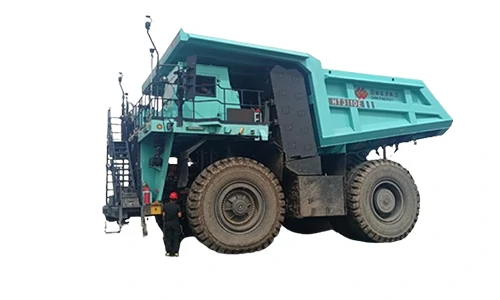
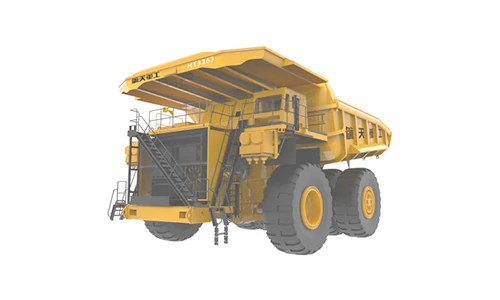
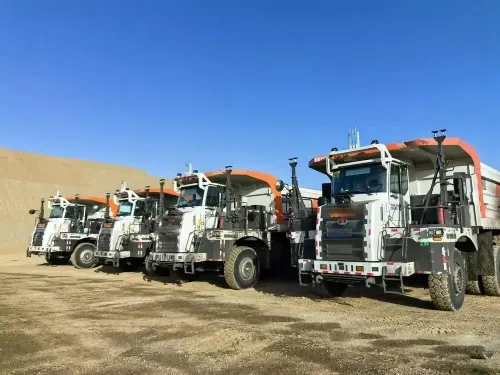
It is a heavy-duty vehicle used in open-pit mines for short-distance transportation of materials such as ore and earth.
Features: Compared to heavy-duty trucks used on highways, it has a “wide body,” a much larger load capacity (typically tens to hundreds of tons), lower speed, shorter transport distance, and operates on closed/semi-closed fixed-route mining areas.
Working environment: Extremely harsh, with dust, noise, and vibration; complex working conditions, including slopes, sharp bends, and bumpy roads; and safety hazards such as driver fatigue, landslides, and collisions.
Unmanned operation: Precisely because of the aforementioned harsh environment, the need to replace manual labor with machines becomes very strong. This improves safety, increases efficiency, and controls costs.
Ⅱ. What is a drive-by-wire chassis? Why is it the cornerstone of autonomous driving?
Core concept: Simply put, a drive-by-wire chassis is an actuator that uses electrical wires (or signals) to replace traditional mechanical and hydraulic connections to control the vehicle.
Traditional vehicles vs. drive-by-wire vehicles
Traditional Vehicles:
- Steering: Driver turns the steering wheel -> Steering column -> Hydraulic power steering -> Wheel steering.
- Braking: Driver presses the brake pedal -> Master brake cylinder -> Hydraulic/pneumatic system -> Brake wheel cylinders.
- Throttle: Driver presses the accelerator pedal -> Cable/sensor -> Engine control unit.
- Gear Shifting: Driver pushes the gear lever -> Cable -> Transmission.
Drive-by-Wire Vehicles:
- Eliminates or significantly shortens intermediate physical connections (such as steering column, brake lines, accelerator cables, etc.).
- Control Logic: Control command (electrical signal) -> Controller -> Actuator -> Action.
For example, the “brain” (main control computer) of an autonomous driving system issues a digital command to “turn 30 degrees left,” which is transmitted via cable to the steering controller, which then drives the motor/hydraulic system to complete the steering.
Why is a drive-by-wire chassis the cornerstone of autonomous driving?
Achieves “human-vehicle decoupling”: The “brain” of autonomous driving no longer needs a mechanical “driver robot” to simulate human hand and foot movements. It can control the vehicle directly through electrical signals, resulting in faster, more precise, and more reliable response.
Facilitates the integration of vehicle control algorithms: The drive-by-wire system provides a standardized, software-defined interface, allowing autonomous driving algorithms to easily control the vehicle’s speed, direction, and braking, much like calling a function.
Fast and precise response: Electrical signal transmission speed is much faster than mechanical and hydraulic transmission, making vehicle control more sensitive and precise.
Facilitates redundant design: For safety, autonomous driving systems require backups. Drive-by-wire systems are easier to design with dual or even triple redundancy in controllers, power supplies, and communication networks, ensuring the vehicle can safely stop even if a single component fails.
Ⅲ. Specific Composition and Key Technologies of Unmanned Drive-by-Wire Chassis
A complete unmanned drive-by-wire chassis for a wide-body mining dump truck mainly consists of a core drive-by-wire execution system and a support and integration system:
Core Drive-by-Wire Execution System
1.Drive-by-Wire Steering System
- 📌Function: Receives steering angle commands and precisely controls wheel steering.
- 🛠️Components: Steering ECU, motor/electro-hydraulic servo system, steering gear, sensors, etc.
- ⚙️Key Requirements: High reliability, low latency, and sufficient steering force (given the heavy load and high steering resistance of mining trucks). Multiple redundancies are necessary, such as dual motors and dual ECUs, so that even if one system fails, basic steering capability can be maintained.
2.Drive-by-Wire Braking System
- 📌Function: Receives braking commands and controls vehicle deceleration or stopping.
- 🛠️Components: Typically uses an electro-pneumatic or electro-hydraulic braking system. Includes a brake ECU, pressure sensors, solenoid valves, and backup air/hydraulic sources.
- ⚙️Key Requirements: Extremely high safety level. Redundant braking capability is essential. If the conventional braking system fails, a backup system (such as a spring-loaded brake or an independent emergency brake circuit) must automatically take over to ensure a safe stop.
3.Drive-by-wire system
- 📌Function: Receives throttle/drive force commands and controls the engine (or electric motor) speed and torque output.
- 🛠️Components: Engine ECU, Vehicle Control Unit (VCU), Transmission Control Unit (TCU) (for traditional gasoline vehicles) or Motor Control Unit (MCU) (for electric mining trucks).
- ⚙️Key requirements: Deep integration with the powertrain for smooth and precise speed control.
4.Shift-by-wire system
- 📌Function: Receives shift commands and automatically controls the transmission gears.
- 🛠️Components: Shift ECU, electronic shift actuator.
- ⚙️Key requirements: Accurate and smooth shifting, avoiding shocks.
5.Lift-by-wire system
- 📌Function: Receives lift/lower commands and controls the unloading of the cargo box.
- 🛠️Components: Lifting ECU, electro-hydraulic valve, lifting cylinder.
- ⚙️Key requirements: Reliable operation, accurate positioning detection, and prevention of misoperation.
Support and Integration System
1.Vehicle Domain Controller or Vehicle Controller
🧠This is the “cerebellum” of the drive-by-wire chassis, responsible for coordinating various drive-by-wire subsystems. It receives high-level instructions (such as “target speed 60km/h”) from the autonomous driving “brain” (decision-making layer), and then breaks these instructions down into specific, coordinated low-level instructions, which are sent to the steering, drive, and braking systems to ensure smooth and safe vehicle operation.
2.Redundancy Design
- ⚡Power Redundancy: Dual or multiple power supplies ensure that a power outage in any one circuit will not affect the core system.
- 📶Communication Redundancy: Dual CAN/CAN FD or more advanced Ethernet networks are used to prevent communication interruptions.
- 🛠️Controller Redundancy: Critical controllers (such as steering and braking ECUs) are duplicated, serving as hot backups for each other.
- 📏Sensor Redundancy: Critical status sensors (such as wheel speed, pressure, and angle sensors) are also backed up.
3.Fault Diagnosis and Safety Handling System
- 👀Real-time monitoring of the status of all drive-by-wire components.
- 🛠️ Once a fault is detected, it will be immediately handled according to the preset safety strategy, such as: 📡degrading operation, triggering the fault diagnosis and safety handling system.⚠️For example: degrading operation.
- 🛠️Triggering audible and visual alarms.
- 🅿️ until the least risk strategy is implemented—that is, controlling the vehicle to safely and smoothly stop in the predetermined area.
Ⅳ.Summary and Value:
The essence of the unmanned drive-by-wire chassis for wide-body mining dump trucks is to transform a traditional mechanical hydraulic vehicle into an intelligent mobile platform that can be precisely, reliably, and safely controlled by software.
Its core value lies in:
- Safety: Completely liberating drivers from dangerous driving environments, eliminating accidents caused by driver fatigue and misjudgment.
- Efficiency: Enabling 24-hour uninterrupted operation, optimizing driving routes, unifying vehicle speeds, and improving overall transportation efficiency.
- Cost: In the long run, saving on driver labor costs, and reducing vehicle wear and fuel/electricity consumption due to smoother operation.
- Management: Achieving digitalization and intelligentization of the transportation process, facilitating centralized fleet scheduling and management.
Current Situation:
Domestic companies such as TAGE, Huituo Intelligent, and Xidi Intelligent Driving, as well as international construction machinery giants such as Caterpillar and Komatsu, are all vigorously developing and promoting unmanned driving solutions for mining trucks based on drive-by-wire chassis.
This has become an irreversible technological trend in smart mine construction.


